
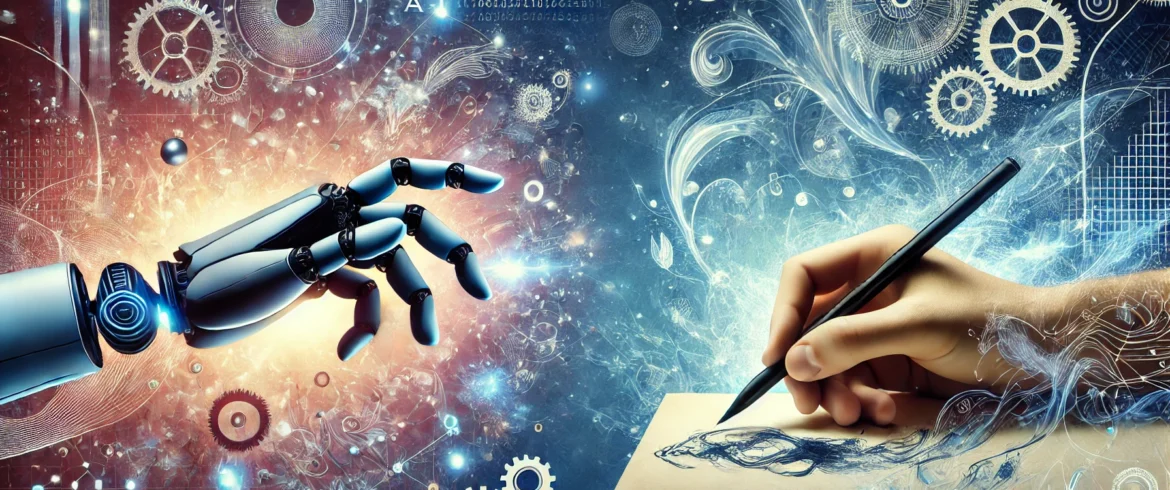

Have you ever caught yourself thinking, “Can a machine really write a novel that moves me or a short story that would melt my heart?” With the rapid advancements in artificial intelligence (AI), this question is more intriguing than ever. In today’s blog post, we’re going to dive into the fascinating world of AI-generated writing, exploring its creative potential and how it stacks up against human imagination. So grab your favorite beverage, get comfy, and let’s jump right in!
The Rise of AI in Creative Writing
Can you believe that just a few years ago, the idea of a machine writing anything beyond basic reports seemed like science fiction? Fast forward to today, and AI models like OpenAI’s Gpt 4o and o1 preview are astonishing us with their ability to generate text that feels remarkably human. They’ve penned essays, composed poetry, and yes—even crafted short stories that can captivate and entertain us.
• How Does It Work?
At the heart of AI’s writing abilities is a technology called machine learning—specifically, a branch known as deep learning. Imagine feeding an AI billions of words from books, articles, and websites—it’s like giving it access to the world’s largest library!
By digesting all this information, the AI learns to recognize patterns and understand how we use language. This allows it to predict and generate text that follows the rules and subtle nuances of human communication.
AI’s Creative Potential in Short Stories
So, can AI truly create compelling short stories? The answer is—drumroll please—a bit of both yes and no!
• The Good
– Coherence and Structure: AI can produce stories with a clear beginning, middle, and end. It understands narrative structures and can maintain context over several paragraphs.
– Style Mimicry: AI can imitate the writing style of famous authors or adapt to a specific genre, whether it’s science fiction, romance, or mystery.
– Idea Generation: For writers experiencing a creative block, AI can provide prompts or even entire story outlines to spark inspiration.
• The Limitations
– Emotional Depth: While AI can simulate emotions, it doesn’t *feel* them. This lack of genuine emotional experience can make its stories feel hollow or unrelatable.
– Originality: AI generates content based on patterns it has learned from existing data. This can lead to clichés or unintentional plagiarism.
– Understanding Subtext: AI struggles with themes that require deep understanding or commentary on the human condition.
Comparing AI Writing to Human Imagination
Let’s be honest—there’s something magical about a story crafted by a human mind. The nuances, the emotional resonance, the unique perspectives—all stem from personal experiences and feelings.
• Human Strengths
– Emotional Intelligence: Humans can draw from real emotions and experiences, adding layers of depth to their stories.
– Cultural Context: It understands societal norms and cultural references allows human writers to create more relatable content.
– Moral and Ethical Judgement: Humans can navigate complex moral dilemmas and present them thoughtfully in their writing.
• AI Strengths
– Speed and Efficiency: AI can generate large volumes of text in seconds, making it a useful tool for drafting and brainstorming.
– Unbiased Perspective: AI doesn’t hold personal biases (although it can reflect biases present in its training data).
– Language Mastery: AI can produce grammatically correct and coherent text, sometimes surpassing humans in technical accuracy.
A Collaborative Future?
Rather than viewing AI as a competitor, many writers are beginning to see it as a collaborator.
• How Writers Are Using AI
– Idea Generation: Using AI to brainstorm plot ideas or character backgrounds.
– Overcoming Writer’s Block: Letting AI suggest the next sentence or paragraph to keep the writing flow going.
– Editing Assistance: AI tools can help with grammar checks and stylistic suggestions.
• Ethical Considerations
– Authorship: If an AI contributes significantly to a piece, who gets the credit?
– Originality: Ensuring that AI-generated content doesn’t infringe on copyrighted material.
– Dependence: Relying too heavily on AI might hinder the development of a writer’s own skills.
The Human Touch: Why It Still Matters
Despite AI’s impressive capabilities, there’s an element of human creativity that machines haven’t been able to replicate.
• Emotion and Empathy
Think about those stories that have made you laugh out loud, brought tears to your eyes, or left you pondering life for days. They touch us deeply because they tap into shared human experiences—love, loss, joy, sorrow. A human writer pours their own emotions into the words, conveying feelings authentically and creating a bond with readers that’s hard to replicate. It’s this genuine emotional connection that allows a story to resonate on such a personal level.
• Innovation and Originality
Humans can think abstractly and make leaps of imagination that aren’t based on prior data. This ability leads to truly original ideas and stories that push boundaries.
• Cultural and Social Relevance
Human writers are immersed in their culture and society. They can comment on current events, social issues, and trends in a way that’s timely and impactful.
Real-World Examples
• AI-Generated Stories
– “1 the Road”: An experimental novel written by an AI trained on Jack Kerouac’s “On the Road.” While interesting, it lacks the depth and coherence of human-written literature.
– Short Stories on AI Platforms: Websites like AI Dungeon allow users to create interactive stories with AI assistance, showcasing both the potential and limitations of AI creativity.
• Human-AI Collaborations
– Writers Using AI Tools: Some authors use AI to help with plotting or character development, blending machine efficiency with human creativity.
– Music and Art: Beyond writing, artists are collaborating with AI to create music and visual art, suggesting a multidisciplinary potential for AI in creativity.
Looking Ahead: The Future of AI and Writing
The big question remains: Will AI ever replace human writers?
• Possible Scenarios
– Enhanced Creativity: AI becomes a standard tool in the writer’s toolkit, much like word processors and grammar checkers.
– Niche Applications: AI writes technical manuals, reports, or content that requires less emotional depth.
– Independent Creation: AI develops to a point where it can produce works indistinguishable from human writing (though we’re not there yet).
• Challenges to Overcome
– Ethical Guidelines: Establishing rules for AI authorship and content generation.
– Technical Improvements: Enhancing AI’s ability to understand context, subtext, and emotions.
– Public Acceptance: Readers may resist AI-generated content, valuing the human element in storytelling.
Conclusion
While AI has made incredible strides in generating written content, it still lacks that special human touch that makes stories truly resonate. Machines can mimic patterns and structures, but genuine creativity springs from consciousness, personal experiences, and emotions—traits that are uniquely human.
That said, AI’s role in writing isn’t something to fear; it’s something to embrace. Think of it as a powerful tool in our creative toolbox, helping us overcome hurdles and inspiring new ideas. The future of storytelling might just be a collaborative dance between human imagination and artificial intelligence.
So, can machines really write? Yes—but maybe not in the same way we do. And that’s perfectly okay! After all, the richness of literature comes from a tapestry of diverse voices and methods. As we move forward, the key will be finding that balance that leverages the strengths of both AI and human creativity.
What are your thoughts? Would you read a story knowing it was written by an AI? Do you think AI will ever match human creativity?
Share your opinions in the comments below!
