
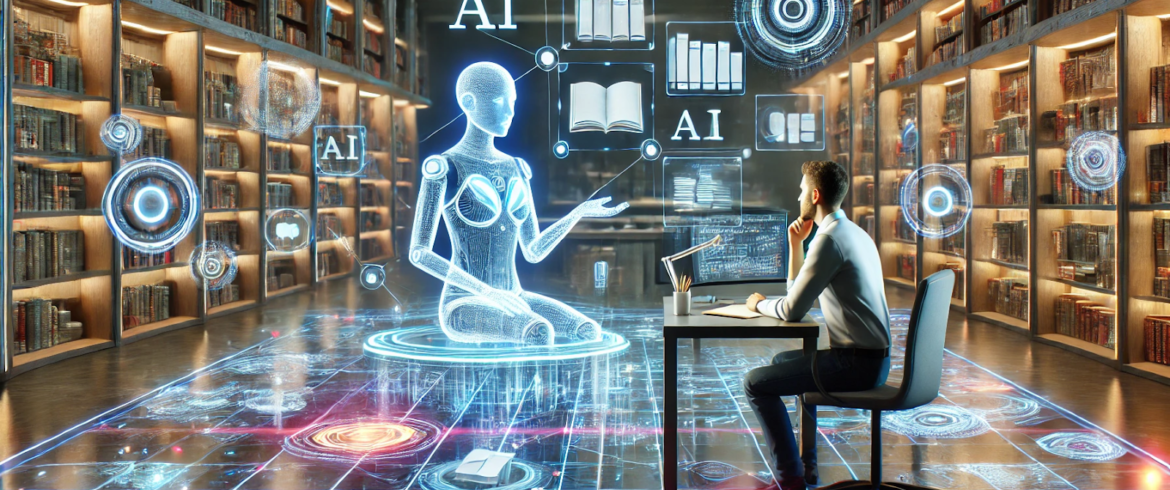

Imagine a world where technology and creativity join forces, enabling stories to evolve beyond traditional constraints. Artificial Intelligence (AI) is reshaping storytelling, assisting authors with brainstorming, editing, voice generation, and even creating interactive, immersive narratives.This shift is more than just a trend; it’s a transformation that’s changing how stories are told and experienced globally. But how is AI truly changing creative writing, and what does this mean for the future of storytelling?
Let’s explore the evolving world of AI in storytelling, from story generation to voice narration, to ethical considerations that can help maintain a balance between technology and human creativity.
The Dawn of AI in Storytelling
In recent years, AI has stepped into the creative space, enhancing fields like art, music, and now, storytelling. Major advances in AI-powered tools like ChatGpt , Jasper, and Sudowrite are helping writers develop plotlines, generate dialogue, and refine their writing. These tools are helping writers develop plotlines, generate dialogue, refine style, and even produce entire narratives. The creative process, once a solo journey, has evolved into a collaborative venture between human imagination and machine precision.For instance, ChatGPT by OpenAI is a versatile tool capable of generating conversations and simulating character dialogue, making it useful for novelists and screenwriters alike. Sudowrite, another popular tool among writers, provides unique features like plot suggestions and character descriptions that help authors overcome writer’s block. The support AI provides is akin to having a writing assistant, making storytelling more accessible to both aspiring and seasoned writers.
| Tool | Primary Use | Special Features |
| ChatGPT | Brainstorming, dialogue generation | Wide-ranging conversational abilities |
| Jasper | Story outline generation | Context-specific story suggestions |
| Sudowrite | Plot twists, character development | Detailed plot and character suggestions |
A in Creative Writing: The New Writing Companion
● Story Generation and Plot Assistance
AI-powered writing tools are empowering authors to brainstorm ideas more efficiently and break through creative blocks. Sudowrite, for example, is particularly known for its ability to suggest plot twists and character arcs, which can breathe life into a story. Jasper AI offers story outline generation based on a simple prompt, giving authors a fresh perspective and an immediate starting point. These tools inspire new concepts and encourage authors to experiment with ideas they may not have considered otherwise.
For example, a writer could use Jasper to create an outline for a mystery novel, complete with chapter summaries, setting ideas, and character traits. With a simple input, Jasper can generate complex, multi-layered plot suggestions, which the author can then refine and customize.
● Language and Style Adaptation
AI is now capable of adapting to different writing styles and voices. AI Shakespeare from DAISYS allows writers to create a play in the Shakespearean style simply by providing a prompt. This means that authors can experiment with historical or culturally specific styles that may have once required intensive research and practice. With AI, creating these distinctive voices is simpler and faster, enabling writers to focus on crafting unique and immersive narratives that resonate across diverse readerships.
AI-Generated Voices: Transforming Audiobooks and Character Narratives
One of the most transformative AI applications is in voice generation, which has revolutionized the audiobook industry and narrative storytelling. Tools such as DAISYS’ AI voice software can generate authentic, emotional voices that bring depth to stories. This technology allows authors and publishers to produce audiobooks and narratives in multiple languages and accents, making stories accessible to global audiences.
● Personalized Listening Experiences
Imagine listening to an audiobook that adapts based on your mood. With AI-generated voices, this is now possible. Some AI technologies can modify the tone, pitch, and pacing of a story, adding suspense or warmth depending on the listener’s emotional state. This technology doesn’t just tell stories; it creates a personalized, immersive experience for each listener. The application of AI in audiobooks and narrative voice is expanding rapidly, with publishers exploring how these adaptive experiences can deepen audience engagement.
AI as an Editing and Proofreading Tool
Editing can be a time-consuming process, but AI tools like Grammarly, ProWritingAid, and Hemingway are changing that by streamlining language checks and style adjustments. Grammarly, for example, provides real-time grammar, tone, and clarity suggestions, while ProWritingAid offers insights into pacing, dialogue tags, and sentence structure. These tools are essential for authors who want polished work with minimal effort.
AI Editing Tools Comparison
| Tool | Grammar Checks | Style Suggestions | Pacing Analysis |
| Grammarly | Yes | Yes | No |
| ProWritingAid | Yes | Yes | Yes |
| Hemingway | No | Yes | No |
● Advanced Plot Analysis and Consistency Checks
Newer AI tools go beyond grammar by helping writers analyze plot structure, pacing, and character consistency. Tools like Narrative Science provide narrative diagnostics, checking for plot holes and ensuring smooth transitions. This enables authors to maintain narrative cohesion, avoid common pitfalls, and produce high-quality work. With AI tools handling these logistical elements, authors can focus on the creative aspects of storytelling.
Interactive and Immersive Storytelling: AI-Driven Choices and Adaptation
Interactive storytelling, particularly in gaming, is experiencing a transformation with AI. Platforms like Inklewriter and Twine allow creators to build branching narratives where reader choices impact story outcomes. AI further enhances this by dynamically adapting plotlines based on real-time user interaction, making stories unique to each reader.
● Real-Time Adaptation and Enhanced Engagement
Choice-based storytelling, pioneered by games like The Walking Dead by Telltale Games, has evolved with AI’s real-time adaptability. AI can learn from a user’s choices, adjusting story arcs and character responses to create individualized experiences. Imagine a detective story that changes depending on the reader’s deductions, or a historical fiction that adapts based on the reader’s preferred time period. With AI, every interaction has the potential to change the course of the narrative, resulting in countless personalized stories.
Ethical Considerations: Balancing AI’s Role in Creative Work
The role of AI in storytelling is promising, but it raises ethical questions, especially regarding the creative workforce. AI can mimic human voices and writing styles, which has implications for voice actors and writers. Some companies, like DAISYS, are addressing this concern by involving voice actors in their projects, offering them revenue-sharing models instead of replacing them with synthetic voices.
● Impact on Writers and Voice Actors
As AI-generated content increases, it brings questions about content ownership. When an AI model contributes to a story, who owns the rights: the author, the AI provider, or the company using the AI? This gray area requires ethical standards to protect creators’ intellectual property and ensure fair compensation. Companies and creators need to establish guidelines that safeguard original voices while allowing AI innovation to thrive.
Future Prospects: What Lies Ahead for AI and Storytelling?
AI has the potential to make storytelling more accessible and inclusive. As tools improve, we could see applications in VR novels, interactive AR experiences, and AI-driven film scripts. These possibilities will enable a wider audience to access, create, and share stories in ways previously unimaginable.
● Enhanced Accessibility and Diversity
AI-driven storytelling can help bridge language barriers, craft culturally relevant narratives, and extend storytelling to previously underrepresented groups. Google’s Project Euphonia is an example of AI aimed at improving digital accessibility, focusing on people with speech impairments. This type of inclusive technology makes storytelling possible for everyone, offering new perspectives and voices to mainstream narratives.o
Conclusion: Fostering a Balanced Future
AI is undeniably transforming the storytelling landscape, but human creativity remains at the heart of every narrative. By fostering ethical innovation and using AI responsibly, we can embrace a future where storytelling is more immersive, inclusive, and accessible than ever before. As AI continues to develop, it should not aim to replace human creativity but rather serve as a powerful tool to augment and enhance it.
Whether through voice modulation, adaptive storylines, or interactive experiences, AI can complement the unique qualities of human storytelling. This partnership between AI and human creators offers the potential for richer, more diverse narratives that connect with audiences on a deeper level. Storytelling has always been a fundamental part of human culture, and as we move forward, AI’s role should be to amplify and support that tradition rather than detract from it.
The future of AI in storytelling lies in collaboration. By working alongside AI, writers, editors, and voice actors can explore new creative avenues and bring previously unimaginable stories to life. Imagine a future where authors and AI tools co-create, with AI acting as a “second mind” that can generate ideas, spot inconsistencies, and suggest alternatives. This collaborative environment could make storytelling faster, more dynamic, and far-reaching.
Final Thoughts: Navigating the AI Storytelling Revolution
And in the coming years, the synergy between AI and human creativity will likely redefine the boundaries of storytelling, opening new pathways for creativity, engagement, and inclusivity. For readers and audiences, this means stories that are not only entertaining but also interactive, adaptable, and deeply personal. For creators, it means having an invaluable partner in AI that supports their craft and expands the horizons of what’s possible.
As we step into this AI-powered future of storytelling, one thing remains certain: No matter how sophisticated AI becomes, the heart of every great story will always be the human experience.

Leave A Comment