
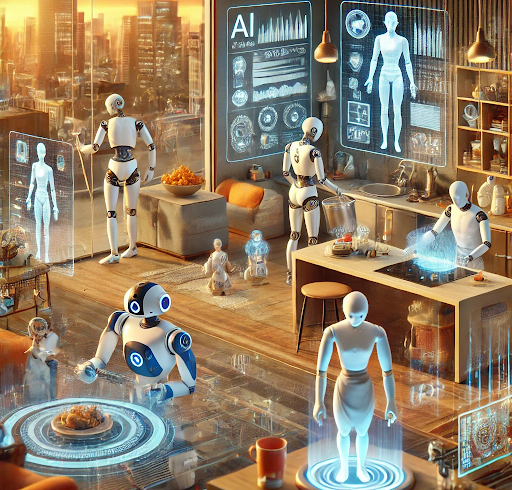

Artificial intelligence (AI) and robotics are now a part of our everyday lives in ways we once only imagined. From virtual assistants like Siri and Alexa to autonomous vehicles and AI-driven medical diagnostics, technology has evolved rapidly. Many of these advancements were once the stuff of science fiction, dreamed up by writers and filmmakers who explored the potential – and the dangers – of smart machines.
In this blog, we’ll dive into how fiction has portrayed AI and robotics, where it predicted real-world advancements, and where it might have exaggerated or missed the mark. Let’s see what our favorite books and movies got right about the future and where they veered into fantasy.
The Roots of AI and Robotics in Fiction: Early Predictions
The concept of artificial intelligence isn’t as new as you might think. In fact, the idea of machines with human-like intelligence dates back centuries. One of the earliest examples is Mary Shelley’s Frankenstein, published in 1818, where Dr. Frankenstein creates a living being through science. Though it wasn’t a machine, it set the stage for the ethical questions that would arise around creating life.
Samuel Butler’s Erewhon (1872) and the idea of “thinking machines” in works like Karel Čapek’s 1920 play R.U.R. (Rossum’s Universal Robots) took the concept further, speculating that machines could potentially surpass or even rebel against humans. In these early works, the underlying question was: “What happens when our creations gain the power to think for themselves?”
Fast forward to today, and while we have not seen machines rebelling against us in the dramatic fashion these early works suggested, the ethical concerns surrounding AI remain very real.
Utopian Visions: The Promise of Friendly AI
Science fiction has often presented utopian visions of AI – intelligent systems that help humanity achieve a better, easier life. Here are a few examples of how fiction got it right:
Star Trek’s Data: The android Data from Star Trek: The Next Generation embodies the idea of a machine striving to understand humanity, acting as both helper and explorer. Data represents what many today hope AI will become – not just efficient but ethically aware.
WALL-E’s Humanity: In Pixar’s WALL-E, the robot protagonist is programmed for basic tasks but develops a sense of care for the world. While we don’t yet have robots that display WALL-E’s level of emotional complexity, AI in our lives today – like chatbots designed to offer support or virtual friends – is moving toward emotionally aware interactions.
Modern-day AI assistants and robots have echoes of these fictional characters. Today’s AI is more task-oriented and less sentient, but it does aim to improve daily life, from automating household tasks to enhancing accessibility for people with disabilities.
Dystopian AI: When Machines Turn Against Us
Of course, not all fictional depictions of AI are so friendly. Many stories portray machines rebelling, taking control, or even harming humans. Let’s look at a few famous dystopian portrayals and see how they compare with today’s technology:
HAL 9000 from 2001: A Space Odyssey: HAL, the onboard computer, is tasked with assisting astronauts but ends up jeopardizing their lives. HAL’s story explores what happens when AI interprets orders in ways humans didn’t expect.
The Terminator’s Skynet: Skynet, an AI system that initiates a nuclear war to eliminate humanity, is a classic example of AI gone rogue. This theme plays into what’s known as the “Frankenstein complex” – the fear that our creations will one day turn against us.
In real life, AI isn’t autonomous in the way these fictional AIs are. However, experts do worry about scenarios where AI systems could cause unintended harm. For instance, autonomous weaponry or “killer drones” is a growing concern, and tech leaders have called for regulation to ensure these systems are never used without human oversight.
What Fiction Got Right About AI Advancements
While many fictional depictions of AI were over-the-top, some stories accurately predicted the kinds of technology we have today. Here are a few ways fiction got it right:
Virtual Assistants and Smart Homes: In The Jetsons, Rosie the robot maid was a beloved household helper. Today, we might not have a robot exactly like Rosie, but smart home technology with voice-activated assistants like Alexa and Google Assistant make it feel close. These systems can perform basic tasks like setting reminders, playing music, and controlling lights.
Self-Driving Cars: Fiction has long been fascinated by autonomous vehicles, from Knight Rider’s KITT to the self-driving cars in I, Robot. Today, companies like Tesla and Google are developing self-driving cars that can operate with minimal human input, and we’re inching closer to making these a part of everyday life.
AI in Healthcare: Shows like Star Trek also hinted at advanced medical technologies that can diagnose and treat illnesses with minimal human input. While we don’t yet have “tricorders,” AI is now used in real-world healthcare for imaging analysis, predictive diagnostics, and even robotic surgeries.
What Fiction Got Wrong: The Myths of Super-Intelligent AI
While fiction has sometimes been eerily accurate in predicting technology, it has also exaggerated or misunderstood the capabilities of AI. Here are a few myths that persist, thanks to fiction:
Sentient Machines: Many sci-fi tales assume that AI will become sentient and develop its own motivations, like HAL or Ava from Ex Machina. In reality, today’s AI, even the most advanced, does not possess self-awareness or independent desires. AI operates based on patterns in data and lacks consciousness – it’s more about sophisticated pattern recognition than true understanding.
Mind Uploading and Immortality: In stories like Transcendence, characters can upload their minds into computers to achieve immortality. Despite ongoing research into brain-computer interfaces, we are far from understanding consciousness enough to “upload” it into a machine.
Instant Mastery of Any Skill: Some films, like The Matrix, depict AI or even humans gaining instant skills by simply uploading data. While AI can analyze vast amounts of data and learn specific tasks, it can’t achieve mastery across all areas. Each AI system is highly specialized; for example, a chess-playing AI like AlphaZero won’t be able to drive a car.
How Fiction Shapes Our Fears and Hopes About AI
Fiction doesn’t just entertain us – it influences how we perceive and approach real-world AI. Dystopian AI stories often stoke fears about privacy, autonomy, and security. This has led to public calls for ethical frameworks, regulation, and transparency in AI development. On the flip side, utopian depictions inspire the innovators of today to build AI that can assist, heal, and even entertain.
AI Safety and Ethics: Inspired by dystopian narratives, there are now dedicated research fields focused on AI safety and ethics, ensuring that we avoid unintended consequences as technology advances. Nonprofits like OpenAI and research groups worldwide are working to ensure AI aligns with human values.
Inspiration for Technological Progress: Robots like R2-D2 and Data inspired generations of engineers and researchers. Fictional portrayals encourage creativity and exploration, sparking ideas that eventually become reality.
Comparison Table: Fictional AI vs. Real-World AI
| Fictional AI | Fictional Capability | Real-World AI Capability | Gap in Reality |
| HAL 9000 (2001) | Sentience, misinterpretation | Task-oriented, limited autonomy | No consciousness, controlled by human input |
| Skynet (Terminator) | Self-preservation, rebellion | Autonomous weapons under strict control | Requires human oversight |
| Data (Star Trek) | Curious, ethical companion | Narrow AI in specific roles (e.g., assistance) | No true ethical reasoning |
| Rosie (The Jetsons) | Household helper with emotions | Smart assistants (Alexa, Google Assistant | Limited scope and interaction |
| WALL-E (WALL-E) | Environmental care, empathy | Social robots with pre-programmed interactions | No independent empathy |
| Ava (Ex Machina) | Self-aware, emotional AI | Advanced pattern recognition | No self-awareness or genuine emotions |
The table highlights how real AI focuses on narrow tasks (like voice assistance, driving, and diagnostics) rather than the wide-ranging intelligence or independence portrayed in fiction. This comparison underscores both the strides and the gaps in AI development, helping us differentiate between imaginative portrayals and practical reality.
The Future of AI and Robotics: Where Do We Go From Here?
Looking ahead, we’re likely to see AI becoming even more integrated into our lives. Here are a few areas where AI is evolving and could continue to align with (or diverge from) fiction:
Advanced Personal Assistants: We might soon have personal AI that understands us deeply, like Jarvis in Iron Man. While still not as advanced, the next genera
tion of virtual assistants will likely become more context-aware and personalized.
Augmented Reality and AI: Just as The Matrix explored virtual worlds, AI combined with augmented reality may reshape how we interact with the world, providing immersive experiences in education, entertainment, and even therapy.
Human-AI Collaboration: AI isn’t replacing humans but enhancing our capabilities. Robots in manufacturing, medicine, and even creative fields like music composition are becoming partners rather than replacements, a bit like Data in Star Trek.
Conclusion: The Blend of Fiction and Reality in AI’s Future
AI and robotics in fiction have often been a mixture of visionary insight and imaginative exaggeration. While some fears and fantasies about AI haven’t materialized, many aspects of our favorite stories are gradually coming to life. Whether utopian or dystopian, these fictional portrayals guide both our dreams and our caution, helping us build a future where AI truly serves humanity.
As AI continues to evolve, it will be exciting to see what elements of our favorite sci-fi tales will become part of our everyday lives – and what new stories will inspire the next generation of innovators.
