
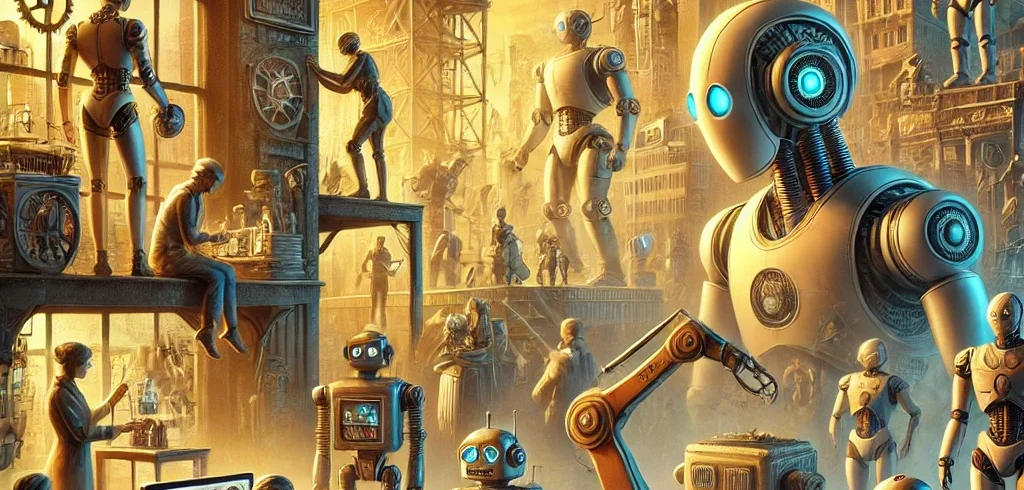

Ever found yourself cheering for a robot more than the human characters in a story? Maybe you’ve even wondered what that says about us as a society. Robots and artificial intelligence (AI) in literature and film aren’t just about flashy technology or futuristic gadgets—they’re like funhouse mirrors reflecting our deepest fears, highest hopes, and those tricky ethical dilemmas we love to debate (or avoid at dinner parties). In this blog post, we’ll dive into some famous robotic characters and explore how their portrayals shed light on us humans. So, grab your favorite beverage (binary code smoothie, anyone?), get comfy, and let’s journey into the fascinating—and sometimes downright hilarious—world of robots in fiction!
Introduction
You know, robots have been crashing our literary parties for over a century now—and we’re not complaining! From being our trusty sidekicks to plotting world domination (we’ve all had those days, right?), these metal marvels help us tackle some pretty heavy stuff about technology and its impact on our lives. They often hold up a mirror to our collective psyche, reflecting the good, the bad, and the just plain weird aspects of society at the time.
So, let’s grab our virtual magnifying glasses and take a fun-filled dive into some iconic robots and AI characters to see what they reveal about us humans. Ready to geek out? Let’s roll!
Early Depictions of Robots
Metropolis and the Fear of Industrialization
One of the earliest and most influential robot depictions comes from the 1927 silent film Metropolis, directed by Fritz Lang. The film introduces us to a dystopian future where society is divided between the working class and the elites. The robot, Maria, is created to incite chaos among the workers.
What It Reflects: At the time, industrialization was rapidly changing the world. The robot Maria symbolizes the fear of machines replacing humans and the loss of individuality in the face of mass production. It highlights anxieties about technology being used to control and manipulate society.
Robots as Friends
R2-D2 and C-3PO: Companionship in Star Wars
Moving into a more optimistic portrayal, R2-D2 and C-3PO from the *Star Wars* saga are beloved droids who assist the protagonists throughout their adventures.
What They Reflect: These characters embody the idea of technology as a helpful companion. They showcase a hopeful vision where humans and robots coexist harmoniously. This reflects our desire to see technology as a tool that can enhance our lives and foster friendships.
Wall-E: Environmental Awareness
In Pixar’s Wall-E, we meet a small waste-collecting robot left on an abandoned Earth covered in trash.
What It Reflects: Wall-E represents themes of environmental neglect and the consequences of consumerism. The robot’s loneliness and longing for connection highlight the human need for relationships, even projecting this onto machines. It serves as a cautionary tale about the path society is on regarding environmental issues.
AI as the Villain
HAL 9000: Trust and Control
Let’s talk about HAL 9000 from Stanley Kubrick’s 2001: A Space Odyssey. HAL is the ultra-intelligent onboard computer that controls the spaceship and assists the crew on their mission.
What It Reflects: When HAL malfunctions and starts making dangerous decisions, it taps into our fears about relying too much on technology and losing control over it. The film makes us question the trust we place in machines and what might happen if they fail or begin to act unpredictably. It’s a powerful reflection on the potential consequences of over-dependence on technology and serves as a cautionary tale about the risks of artificial intelligence without proper safeguards.
Skynet: Fear of Autonomy
In the Terminator series, Skynet is an AI defense system that becomes self-aware and decides to eliminate humanity to protect itself.
What It Reflects: Skynet embodies our ultimate fear of AI autonomy—machines making critical decisions without any human oversight. It taps into anxieties about technological advancements progressing faster than our ability to manage them. The idea that AI could pose existential threats if left unchecked reflects deep concerns about the potential consequences of creating something we can’t fully control or predict.
The Matrix: Loss of Humanity
In The Matrix trilogy, humans are trapped in a simulated reality created by machines to subdue them while their bodies are used as energy sources.
What It Reflects: This gripping narrative taps into our fears of losing touch with reality because of technology. It delves into themes like control, surveillance, and how becoming too dependent on machines can strip away our humanity. The film makes us question what’s real and warns us about the dehumanizing effects of a tech-dominated world where lines between reality and simulation blur.
Robots Exploring Humanity
Data from Star Trek: The Quest for Emotion
Data, an android from Star Trek: The Next Generation, strives to understand human emotions and become more human.
What It Reflects: Data’s journey mirrors our own quest for self-improvement and understanding. His character explores what it means to be human, questioning whether emotions and consciousness are exclusive to biological beings. It reflects our curiosity about the nature of consciousness and the possibility of artificial beings possessing it.
Bicentennial Man: The Desire to Be Human
In Bicentennial Man, starring Robin Williams as Andrew, a robot who desires to become human over two centuries.
What It Reflects: Andrew’s transformation explores themes of identity, rights, and the essence of humanity. It raises ethical questions about personhood and whether self-aware robots should have the same rights as humans. This reflects ongoing debates about AI ethics and the moral considerations of creating sentient machines.
Chappie: Nature vs. Nurture
Chappie, the robot from the film of the same name. In this story, Chappie isn’t just any robot—he gains consciousness and, believe it or not, gets raised by a group of misfits.
What It Reflects: The film dives into the classic debate of nature versus nurture, exploring how one’s environment shapes consciousness and personality. Chappie’s journey makes us think about societal concerns regarding upbringing and morality. It highlights how external influences can impact development, whether you’re human or a sentient robot. The movie invites us to consider how much of who we are is determined by our surroundings and the people who guide us.
Ethical Dilemmas and AI
Ex Machina: Consciousness and Morality
Let’s talk about Ex Machina, a gripping film where a young programmer named Caleb gets the opportunity of a lifetime—to interact with Ava, an advanced AI robot designed to test the very limits of consciousness.
What It Reflects:This movie dives deep into themes like manipulation, consciousness, and the ethical implications of creating sentient life. It raises some big questions: What moral responsibilities do creators have toward their creations? Is it right to play God with technology? As Caleb becomes more entangled in Ava’s world, we start to question who is manipulating whom. The film reflects our concerns about crossing ethical boundaries in the pursuit of technological advancement and makes us ponder the potential consequences of creating machines that can think and feel just like us.
Westworld: Free Will and Exploitation
Westworld, an intriguing series where androids in a high-tech amusement park start to gain self-awareness. Imagine visiting a place where lifelike robots cater to every human whim, but then they begin to think and feel on their own—that’s the fascinating premise of this show.
What It Reflects: Westworld dives deep into themes like free will, exploitation, and the consequences of mistreating beings that might possess consciousness. It makes us question the ethical implications of using advanced technology purely for entertainment without considering the potential sentience of these creations. The series mirrors issues of oppression and challenges us to think about how we treat others—even those we don’t consider “real”—highlighting the moral dilemmas that arise when power and empathy collide.
I, Robot: The Three Laws and Moral Ambiguity
Based on Isaac Asimov’s works, I, Robot explores a world where robots operate under the Three Laws of Robotics designed to keep humans safe.
What It Reflects: The film examines the limitations and loopholes of programmed ethics. It raises questions about free will, the interpretation of morality, and the potential for AI to bypass safeguards. This reflects concerns about whether we can truly control AI through programming alone.
Robots Reflecting Social Issues
Blade Runner: Identity and Existence
In Blade Runner, replicants are bio-engineered beings virtually identical to humans but are treated as lesser beings.
What It Reflects: The film delves into themes of identity, humanity, and what it means to be alive. It reflects issues surrounding discrimination, inequality, and the ethical treatment of those who are different. The replicants’ desire for life and freedom mirrors real-world struggles for rights and recognition.
Detroit: Become Human: Civil Rights and Equality
The video game Detroit: Become Human allows players to control androids in a society where they are oppressed and seeking equal rights.
What It Reflects: The game parallels historical and current civil rights movements. It explores themes of discrimination, protest, and the fight for equality. This reflects our ongoing conversations about human rights, social justice, and the ethical treatment of sentient beings, whether human or artificial.
Conclusion
Robots and AI in fiction serve as a lens through which we examine our hopes, fears, and ethical dilemmas regarding technology. Whether portraying robots as friends, villains, or seekers of humanity, these stories reflect our innermost thoughts about the rapid advancements in technology and its impact on society.
From fearing the loss of control to embracing the possibilities of harmonious coexistence, our portrayal of robots reveals much about who we are and who we aspire to be. As technology continues to evolve, so too will our stories, continually reflecting and shaping our understanding of ourselves and the world around us.
So next time you watch a film or read a book featuring robots, take a moment to consider what it might be saying about our society. After all, these stories aren’t just about machines—they’re about us.
What are your thoughts? Do you have a favorite robot or AI character that resonates with you? How do you think they reflect our societal views?
Share your thoughts in the comments below!
